

What is the accuracy of the tool positioning system in a Dual Head CNC Lathe?
Jan 21, 2026
Leave a message
In the realm of modern manufacturing, the Dual Head CNC Lathe stands as a remarkable piece of equipment, offering enhanced efficiency and precision in turning operations. One of the most critical aspects of a Dual Head CNC Lathe is the accuracy of its tool positioning system. As a supplier of Dual Head CNC Lathes, I am often asked about the accuracy of the tool positioning system in these machines. In this blog post, I will delve into the details of what the accuracy of the tool positioning system in a Dual Head CNC Lathe entails, the factors that affect it, and its significance in the manufacturing process.
Understanding the Tool Positioning System in a Dual Head CNC Lathe
The tool positioning system in a Dual Head CNC Lathe is responsible for precisely moving the cutting tools to the desired positions on the workpiece. This system consists of several components, including servo motors, ball screws, linear guides, and control systems. The servo motors drive the ball screws, which convert rotational motion into linear motion, allowing the cutting tools to move along the X, Y, and Z axes. The linear guides ensure smooth and accurate movement of the tool carriers, while the control system coordinates the movement of the motors based on the programmed instructions.
The accuracy of the tool positioning system is typically measured in terms of positioning accuracy and repeatability. Positioning accuracy refers to the ability of the system to move the cutting tool to the specified position within a certain tolerance. Repeatability, on the other hand, refers to the system's ability to return to the same position repeatedly with a high degree of consistency. Both positioning accuracy and repeatability are crucial for achieving high-quality machining results.
Factors Affecting the Accuracy of the Tool Positioning System
Several factors can affect the accuracy of the tool positioning system in a Dual Head CNC Lathe. These factors can be broadly categorized into mechanical, electrical, and environmental factors.
Mechanical Factors
- Ball Screw and Nut Assembly: The ball screw and nut assembly is a critical component of the tool positioning system. Any wear or backlash in the ball screw can lead to inaccurate positioning of the cutting tool. Regular maintenance and lubrication of the ball screw and nut assembly are essential to ensure its proper functioning.
- Linear Guides: The linear guides provide support and guidance for the tool carriers. If the linear guides are damaged or misaligned, it can cause the tool carriers to move unevenly, resulting in poor positioning accuracy. Proper installation and alignment of the linear guides are crucial for maintaining high accuracy.
- Tool Holders: The tool holders play a vital role in holding the cutting tools securely in place. Any looseness or misalignment in the tool holders can lead to tool deflection, which can affect the accuracy of the machining operation. Using high-quality tool holders and ensuring proper tightening are essential for accurate tool positioning.
Electrical Factors
- Servo Motors and Drives: The servo motors and drives are responsible for controlling the movement of the tool carriers. Any issues with the servo motors, such as overheating or electrical interference, can affect their performance and lead to inaccurate positioning. Regular inspection and maintenance of the servo motors and drives are necessary to ensure their proper functioning.
- Control System: The control system is the brain of the Dual Head CNC Lathe. It interprets the programmed instructions and sends signals to the servo motors to control the movement of the cutting tools. Any errors or glitches in the control system can result in inaccurate positioning. Using a reliable and high-performance control system is crucial for achieving high accuracy.
Environmental Factors
- Temperature and Humidity: Temperature and humidity can have a significant impact on the accuracy of the tool positioning system. Changes in temperature can cause thermal expansion or contraction of the machine components, leading to dimensional changes and inaccurate positioning. High humidity can also cause corrosion and damage to the electrical components, affecting their performance. Maintaining a stable environment with controlled temperature and humidity is essential for accurate machining.
- Vibration and Noise: Vibration and noise can also affect the accuracy of the tool positioning system. Excessive vibration can cause the cutting tools to chatter, resulting in poor surface finish and inaccurate machining. Noise can interfere with the operation of the control system and affect its ability to accurately position the cutting tools. Isolating the machine from external sources of vibration and noise is crucial for achieving high accuracy.
Significance of Accuracy in the Manufacturing Process
The accuracy of the tool positioning system in a Dual Head CNC Lathe is of utmost importance in the manufacturing process. Here are some key reasons why accuracy matters:
High-Quality Machining Results
Accurate tool positioning ensures that the cutting tools are precisely located at the desired positions on the workpiece. This allows for precise machining operations, such as turning, boring, and threading, resulting in high-quality finished products with tight tolerances. High-quality machining results are essential for meeting the strict requirements of various industries, such as aerospace, automotive, and medical.
Increased Productivity
Accurate tool positioning reduces the need for manual adjustments and rework, leading to increased productivity. When the cutting tools are accurately positioned, the machining process can be completed more efficiently, with fewer errors and less downtime. This allows manufacturers to produce more parts in less time, increasing their overall productivity and profitability.
Cost Savings
Accurate tool positioning helps to minimize material waste and reduce the cost of production. When the cutting tools are accurately positioned, the machining process can be optimized to use the minimum amount of material required to produce the desired part. This reduces the cost of raw materials and waste disposal. Additionally, accurate tool positioning reduces the need for rework and scrap, further reducing the cost of production.
Our Dual Head CNC Lathes and Tool Positioning Accuracy
As a supplier of Dual Head CNC Lathes, we understand the importance of tool positioning accuracy in the manufacturing process. That's why we have designed our Dual Head CNC Lathes with the latest technology and high-quality components to ensure the highest level of accuracy and reliability.
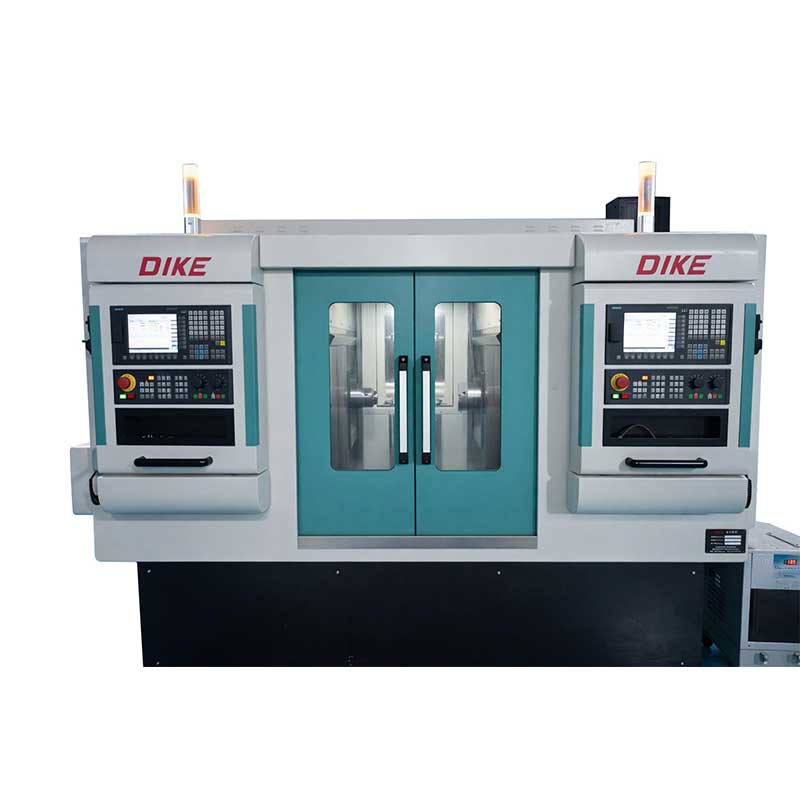

Our Fully Automatic Dual-spindle CNC Lathe is equipped with precision servo motors, high-quality ball screws, and linear guides to ensure accurate and repeatable tool positioning. The advanced control system allows for precise programming and control of the machining process, ensuring that the cutting tools are accurately positioned at all times.
Our Dual Spindle CNC Lathe is designed for high-performance machining with excellent tool positioning accuracy. The rigid machine structure and advanced motion control system minimize vibration and ensure smooth and accurate movement of the cutting tools.
Our High Productivity Dual Spindle Lathe combines high productivity with high accuracy. The fast and precise tool positioning system allows for rapid machining operations, reducing cycle times and increasing productivity.
Contact Us for Your Dual Head CNC Lathe Needs
If you are looking for a reliable and accurate Dual Head CNC Lathe for your manufacturing needs, look no further. Our Dual Head CNC Lathes are designed to meet the highest standards of quality and performance, with excellent tool positioning accuracy. Contact us today to learn more about our products and how we can help you improve your manufacturing process.
References
- Smith, J. (2020). CNC Machining Handbook. New York: McGraw-Hill.
- Jones, A. (2019). Precision Manufacturing Technology. London: Elsevier.
- Brown, R. (2018). Advanced CNC Programming. Chicago: Wiley.